

Campfire Beard Oil
Smoke | Woods | Spice
For hikers lost seeking the Chilnualna lakes as night settles in - deep in backcountry pine - a fire offers a singular comfort — fir, cedar and dry woodsmoke moving through cold night air with a glow of pepper and resin. An essential oil accord built to smell like that air, in a leave-in conditioning base of argan, jojoba, rosehip, and meadowfoam. Softens coarse hair, conditions the skin underneath, and provides a fragrance that stays on the beard without broadcasting scent to the room — the same as our Campfire bar soap and aftershave, in a format built for the beard.
For hikers lost seeking the Chilnualna lakes as night settles in - deep in backcountry pine - a fire offers a singular comfort — fir, cedar and dry woodsmoke moving through cold night air with a glow of pepper and resin. An essential oil accord built to smell like that air, in a leave-in conditioning base of argan, jojoba, rosehip, and meadowfoam. Softens coarse hair, conditions the skin underneath, and provides a fragrance that stays on the beard without broadcasting scent to the room — the same as our Campfire bar soap and aftershave, in a format built for the beard.
Key Ingredients
Argan
Cold pressed from the kernels of the Moroccan argan tree, argan is high in oleic and linoleic fatty acids and vitamin E. It penetrates the hair shaft rather than coating it, making it fast-absorbing and non-greasy. By filling gaps in the hair cuticle, it reduces coarseness and frizziness. Vitamin E aids in protecting hair from environmental damage.
Sea Buckthorn CO2
CO2 extracted to preserve a broad spectrum of bioactive compounds, sea buckthorn is extraordinarily high in omega-7 fatty acid — one of few plant sources of this fatty acid, naturally present in human skin and declining with age. Reduces inflammation and conditions skin beneath the beard more deeply than most carrier oils.
Jojoba
A liquid wax, not an oil — it's the only plant-derived substance that closely mimics sebum in molecular structure. Effective as a skin and hair conditioner, skin recognizes it as sebum-like and absorbs it readily. It helps balance oily and dry skin beneath the beard, and its anti-inflammatory properties reduce beard itch at the skin level.
Frequently Asked Questions
After washing, dispense 3-5 drops into your palm. Rub hands together to warm the oil. Work through your beard from root to tip, massaging into the skin to condition the skin underneath. Use a comb or brush to distribute evenly if your beard is longer. Apply on a slightly damp beard for best absorption - damp hair absorbs oil more readily than dry hair.
3-5 drops on a damp beard trimmed close to the face — enough to condition hair and skin without residue. Longer beards will require more, scaling with length and density. If the oil sits on top of the hair rather than absorbing, you've used too much. More oil adds weight and sheen, which can be done for a styled look — this comes down to personal preference. A dry beard requires more oil to distribute evenly — increase to 6-8 drops if applying to dry hair and even more for a longer, thicker beard. If you're still unsure, start with less and build from there.
Beard oil does not stimulate hair growth in any medicinal sense — that's the territory of treatments like minoxidil, not a conditioning oil. What beard oil does is improve the conditions under which your beard grows. Dry, brittle hair breaks before it reaches its full length. Dry skin at the root can impede healthy follicle function. Regular use of beard oil reduces breakage, conditions the skin underneath, and keeps both hair and skin in the healthiest possible state. The result is a beard that reaches its genetic potential more consistently — not because the oil directly promoted growth, but because it removed the conditions that were holding it back.
Yes — daily use is recommended for most beard types. For conditioning, apply after washing each morning — the skin underneath a beard is often the driest skin on your face and benefits from consistency, particularly in dry climates or during the winter season. If you're using beard oil mostly for its fragrance, a few drops in the morning is a legitimate and enjoyable way to wear a scent that stays close and personal throughout the day, and reapplying judiciously in the evening will not be excessive for most skin types.
More, however, is not always better. Daily use at the right amount absorbs cleanly. Applying too heavily or too frequently causes product buildup on the hair shaft, leaving the beard feeling heavy or waxy rather than conditioned. If your beard starts feeling coated rather than soft, reduce your application amount or frequency and wash with beard soap to reset.
No — beard oil should not make your beard greasy when applied correctly. The base oils in our formula — argan, grapeseed, and jojoba — are fast-absorbing and non-comedogenic, meaning they penetrate the hair and skin rather than sitting on the surface.
Heavy or frequent application can coat the hair shaft, leaving the beard feeling heavy and waxy with a wet or high-sheen appearance. To avoid this, apply 3-5 drops to a damp trimmed beard, scaling up with length and density. If your beard feels too oily, wash with beard soap to remove buildup and start fresh with a lighter application.
Beard oil and beard balm serve different but complementary purposes. Beard oil — built on fast-absorbing carrier oils like argan and jojoba — penetrates the hair and skin quickly, conditioning from within with minimal residue or sheen. It's your daily foundation product.
Beard balm contains waxes — typically beeswax — and heavier butters that deliberately coat the hair shaft rather than absorbing into it. This gives the beard more weight, a higher sheen, and light hold for shaping. Where beard oil works invisibly, beard balm is visible in the finish.
Most beard care routines use both — oil daily for conditioning and scent, balm when you want a more groomed or styled appearance. For maximum hold and precise styling, beard wax goes further than balm.
Because beard balm coats rather than absorbs, the waxes and heavier butters it contains are generally not non-comedogenic — meaning they can potentially clog pores for acne-prone or sensitive skin types. Beard oil's fast-absorbing base is a better daily choice for most skin, with balm reserved for finishing and styling when needed.
Evan has been great to work with. I asked about a certain scent profile I was looking for and he pointed me in the right direction, and even was nice enough to answer some questions I had about the product. This is a store I will continue to support.
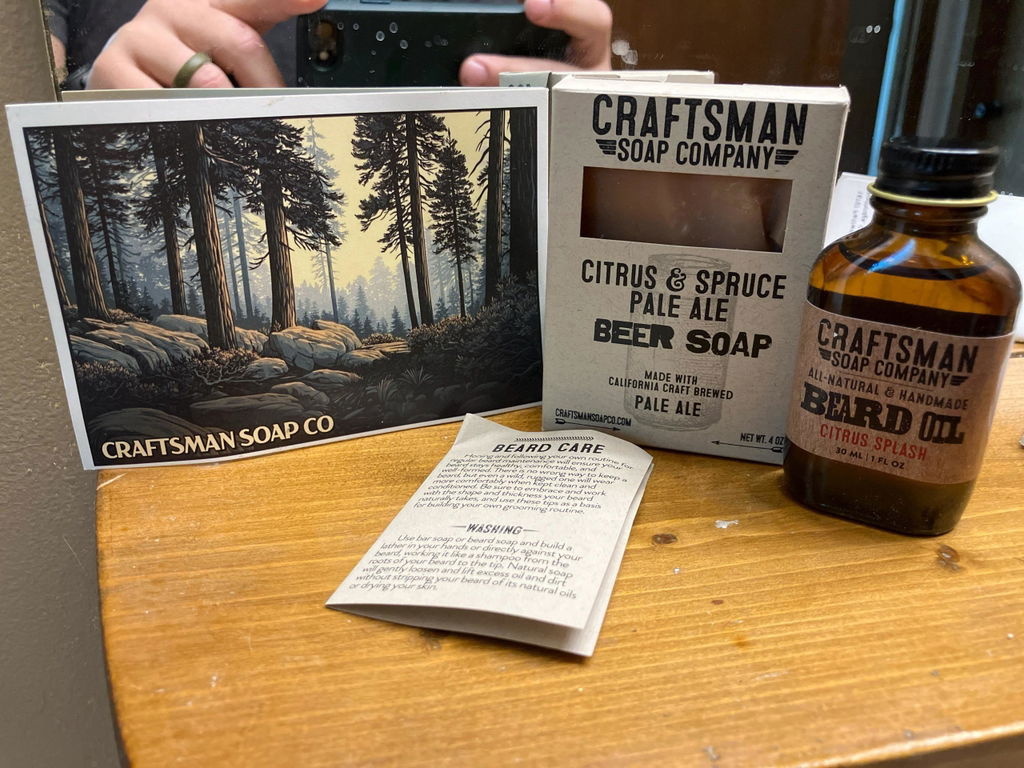
fast shipping and packaged really cute with a signed business card from the seller :) i got a sample beard oil vial, sample face serum, and a soap sampler and they are quite a bit smaller than i expected but i’m still excited to gift them this year.

My man and I love this stuff, makes his goatee, that he has to keep trimmed short for work, soft and smells great he just applies after a shower. He also uses the beard balm from here in the morning. Great stuff and always quick on shipping. Thank you!

Just got it, no bothers and it's exactly what I expected. The quality is custom original; tried a lil smell test and it's wonderful. I am very pleased.
Thanks, stay well.

Cute little bottle. Great stocking stuffer. My fiancé loves the citrus scent. I’m excited to see how this oil treats his beard! & fast shipping

Amazing packaging and fast shipping. The product smells amazing and my partner's beard has become noticeably softer.

I really like the moustache wax so thought I’d try this as well. Smells great and holds well. I don’t use much so it’s not visibly oily. There was an issue with the post office and Evan took care of it immediately, so on top of really liking the products I highly recommend the seller too.
This was a gift. Fast shipping and no issues with customer service. Smells great and happy with the purchase!
repeat customer - i buy this beard oil for my partner and he loves it.
All the products that I have tried are too notch. I highly recommend the beard oil, after shave, and beard wax.
This stuff smells and feels great. I have never had a low quality item from Craftsman soap co. Also impressed with the ingredients and how well they work. Will buy from again very soon.
Great product! My husband loved it. It was delivered late, at no fault of the seller, and the seller was very helpful in resolving the matter when I reached out to them.
This beard oil was beautifully packaged and smells amazing. I can’t wait to give it to my boyfriend to use, so I can snuggle up in his beard and smell this amazing scent!
Coulda stood a little stronger scent.
Coulda stood a little stronger scent.
My boyfriend loves it! I love the smell as well!
I bought my nephew a bottle of this beard oil last year. He said everything he could get for his beard smelled unpleasant and too strong. This year when I ordered him another bottle for Christmas he said he absolutely loves it and it's his favorite smell. I hope they never stop selling it cuz I'll have to think of a new gift.
This stuff is all awesome. I give the soaps and beard oil every year. Smells fantastic!
I'll admit, I procrastinated my holiday shopping and was worried I wouldn't get this on time. WOW...i received it in just a couple of days. Im impressed with the product quality. The guys in my family will be very pleased
My brother in law loved this as a gift
Reliably excellent beard oils. Thank you for being out there.
Reliably excellent beard oils. Thanks for being out there.
The beard oil smells exactly as described and the scent evolves as it sits on your beard. Great product
The first bottle arrived 1/2 full because it leaked during shipment. Shop was absolutely awesome and sent a replacement right away! Highly recommend!!
I was expecting a stronger cedar smell
Smells great feels great. Thank you.
Would definitely buy again! Arrived quick & is as described.
Smells so good! This was a gift for my husband, and he absolutely LOVES it! Will be a returning customer, for sure!
Not quite the scent I expected but the quality of the ingredients is great!
Smells great, works well. Not my first purchase here, and surely not my last!
Smells great
Packaged extremely well
Can’t wait to give to my son